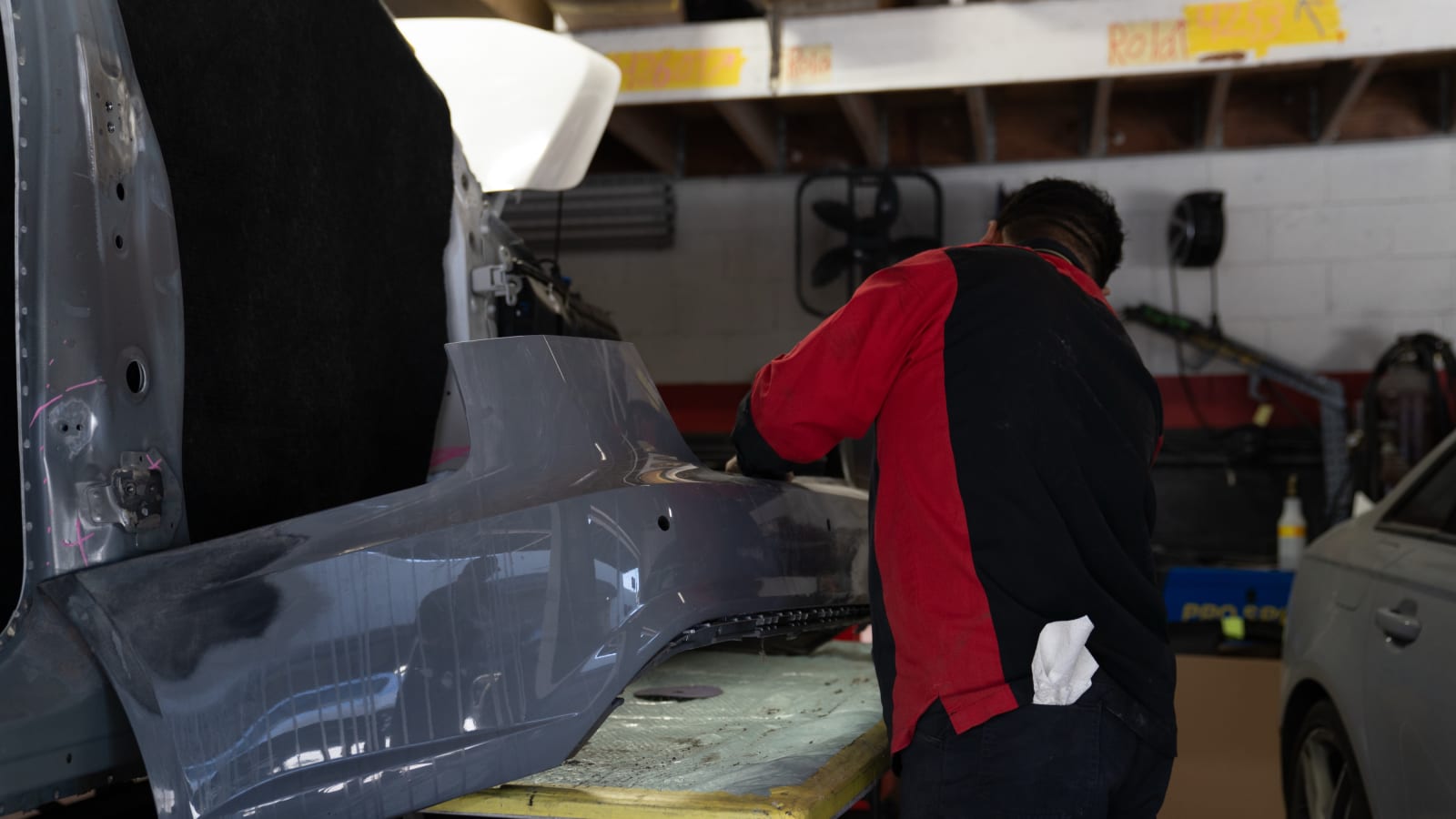
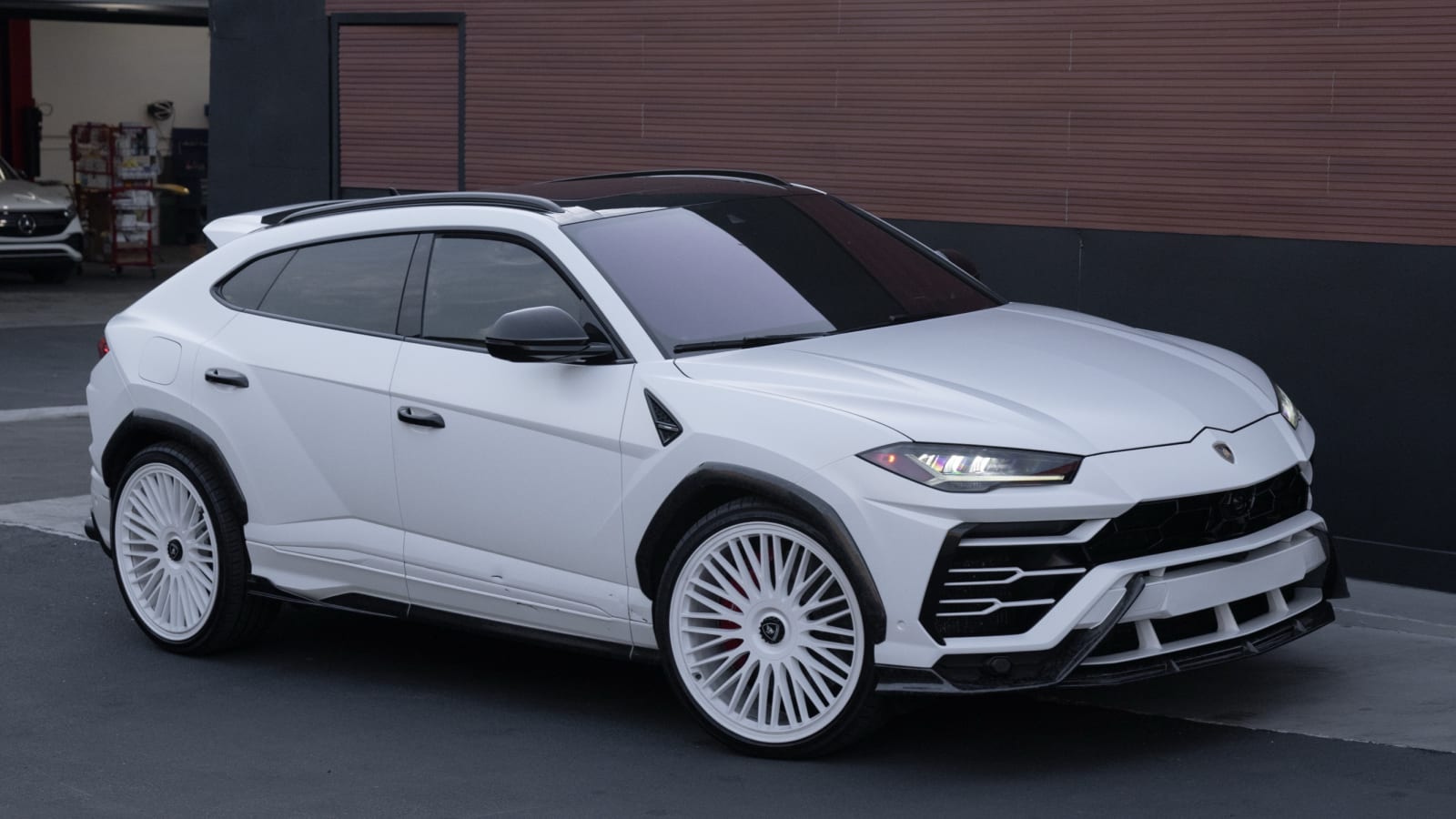
Luxury and exotic vehicles require specialized collision repair because they’re built with materials, tolerances, and safety systems that standard body shops aren’t equipped to handle. Aluminum body panels, carbon fiber components, mixed-material construction, multi-layer paint systems, and complex ADAS sensor arrays all demand manufacturer-specific repair procedures, dedicated tooling, and technicians trained on the specific vehicle platform. Choosing a general shop for a luxury vehicle repair risks structural compromise, warranty loss, sensor malfunction, and significant resale value damage.
A Porsche 911’s aluminum body panels can’t be repaired with the same tools and techniques used on a Honda Civic’s steel fenders. A Ferrari’s carbon fiber components require a controlled environment and specialized bonding procedures that most body shops have never performed. A Rolls-Royce’s multi-layer paint system — sometimes 15+ layers deep — demands color-matching technology and refinishing expertise that goes far beyond what a standard booth and gun can deliver.
This isn’t elitism. It’s engineering.
Luxury and exotic vehicles are built differently at every level — the materials, the construction methods, the tolerances, the safety systems, the electronics. When one of these vehicles is damaged in a collision, the repair process has to match the way it was built. A shop that’s perfectly capable of repairing a midsize sedan may not have the training, the equipment, or the manufacturer-specific knowledge to properly restore a vehicle that costs five to fifty times as much.
If you own a luxury or exotic vehicle, understanding why specialized repair matters isn’t optional — it’s the difference between a car that’s properly restored and one that’s been patched together by a shop that was guessing.
The Materials Are Different — and That Changes Everything
The most fundamental difference between luxury vehicles and standard production cars is what they’re made of.
Aluminum Body Construction
Mercedes-Benz, BMW, Porsche, Tesla, Land Rover, and Audi all use significant aluminum in their body structures. Some models like the Audi A8 or Tesla Model S, feature aluminum-intensive construction where the majority of the body-in-white is aluminum rather than steel.
Aluminum requires a completely different repair approach:
It can’t be worked in the same space as steel. Steel particles contaminating aluminum cause galvanic corrosion essentially, the two metals react chemically when they’re in contact, and the aluminum corrodes from the inside. A shop that repairs aluminum vehicles needs a dedicated aluminum repair area with separate tools, separate work surfaces, and separate ventilation.
It responds differently to heat. Aluminum loses structural integrity when heated beyond specific thresholds — thresholds that vary by alloy. A technician who tries to heat-straighten an aluminum panel using the same technique they’d use on steel can permanently weaken the part.
It requires different joining methods. Aluminum panels are often bonded with structural adhesives, riveted, or welded with specialized equipment, not the MIG welders used on steel repair. Each manufacturer specifies exact adhesive types, rivet patterns, and weld parameters for their aluminum structures.
Carbon Fiber Components
Ferrari, Lamborghini, McLaren, Porsche, and BMW all use carbon fiber in varying degrees from individual body panels to full monocoque structures. Carbon fiber is extraordinarily strong for its weight, but it behaves nothing like metal when damaged.
Carbon fiber doesn’t bend. It fractures, and the fracture pattern isn’t always visible damage can exist within the laminate layers without showing on the surface. Repairing carbon fiber requires inspection methods (including ultrasonic testing in some cases), manufacturer-specific repair procedures, and controlled-environment bonding that most standard body shops don’t offer.
In many cases, damaged carbon fiber components must be replaced entirely rather than repaired, and the replacement parts are sourced from the manufacturer at a cost that reflects the material and engineering involved.
Mixed-Material Construction
Many modern luxury vehicles combine aluminum, high-strength steel, carbon fiber, and composite materials in a single body structure. Each material has different repair requirements, different joining methods, and different thermal properties. The repair procedures for these vehicles read like engineering manuals, because that’s exactly what they are.
A shop that doesn’t follow the manufacturer’s material-specific procedures for each section of the vehicle is taking shortcuts that compromise structural integrity. And structural integrity in a luxury vehicle isn’t just about appearance — it’s about how the car performs in a subsequent collision.
The Tolerances Are Tighter
Walk past a Bentley Continental on the street and run your finger along the gap between the door and the fender. That gap is engineered to within fractions of a millimeter consistent from top to bottom, identical on both sides, perfectly parallel.
Luxury vehicles are built with manufacturing tolerances that standard production vehicles don’t attempt. Panel gaps, door alignment, hood fit, trunk lid flush every exterior surface is expected to align with precision that’s measured in tenths of a millimeter.
After a collision repair, those tolerances have to be restored. A replacement fender that sits one millimeter too far out. A door that’s slightly off-plane. A hood that doesn’t sit flush at the leading edge. On a standard vehicle, these might be within acceptable range. On a luxury vehicle, they’re immediately visible to the owner, to a dealer technician during service, and to a buyer evaluating the car’s repair history.
Restoring these tolerances requires computerized measuring systems that map the vehicle’s structure against the manufacturer’s specifications, fixture-based alignment tools, and the patience to get it right. Shops that repair luxury vehicles by eye or by feel, rather than by measured specification, consistently miss the mark.
The Safety Systems Are More Complex
A 2026 Mercedes-Benz S-Class has over 30 individual ADAS sensors. Radar modules in the front and rear bumpers. A stereo camera system behind the windshield. Ultrasonic sensors around the entire perimeter. Lidar in some configurations. Each one has to be precisely positioned and calibrated to manufacturer specification.
A Porsche Cayenne has cameras in the mirrors, radar in the bumpers, and a forward-facing camera behind the windshield that drives lane keeping, traffic sign recognition, and night vision assist. Every one of these is affected by collision repair involving the body panels they’re mounted behind or integrated into.
The ADAS calibration requirements for luxury vehicles are typically more complex than for standard vehicles because there are more systems to calibrate, the systems interact with each other in ways that require sequential calibration procedures, and the manufacturer’s tolerances for sensor alignment are tighter.
A shop that doesn’t have the diagnostic tools, calibration targets, and controlled environment to perform these procedures is leaving your most expensive safety features in an unknown state after repair.
The Paint Is More Than Paint
Luxury vehicle paint systems are engineering in their own right.
A Ferrari’s paint process can include 15+ layers of material primer, sealer, base coat, color layers (sometimes with metallic or pearlescent effects that shift depending on viewing angle), clear coat, and in some cases a ceramic or protective top layer. The paint itself may be a tri-coat or quad-coat formula that requires precise application technique, specific spray gun configurations, and environmental controls (temperature, humidity, air filtration) that affect how the finish cures and blends.
Color matching on luxury vehicles isn’t as simple as scanning a paint code and mixing a batch. Two panels painted from the same formula can look different depending on spray technique, distance, film thickness, and curing conditions. A skilled refinish technician on a Bentley or Rolls-Royce repair doesn’t just match the color — they match the depth, the metallic orientation, the way light interacts with the surface across viewing angles.
Shops that don’t invest in advanced color-matching spectrophotometry and don’t have technicians experienced with luxury refinishing consistently produce blend lines, metallic mismatch, and orange peel that’s visible in direct light. On a $150,000 vehicle, that’s not acceptable.
The Insurance Fight Is Harder
Luxury vehicle repairs cost more. That’s not a surprise — the materials, the parts, the labor, and the calibration all carry a premium. But higher repair costs mean more friction with insurance adjusters.
Adjusters who routinely approve $8,000 repairs on standard vehicles will scrutinize a $35,000 estimate on a Porsche or a $60,000 estimate on a Ferrari. They’ll push harder for aftermarket parts (which often don’t exist for exotic vehicles, or don’t meet the manufacturer’s specifications when they do). They’ll question labor rates. They’ll challenge the necessity of procedures the manufacturer requires.
This is where your shop’s ability to advocate matters. A shop experienced with luxury vehicle claims knows how to document the repair requirements with manufacturer citations, photograph hidden damage during teardown, and submit supplements that an adjuster can’t reasonably deny. A shop that doesn’t fight this fight effectively leaves you paying the difference out of pocket — or accepting a repair that doesn’t meet the vehicle’s engineering standard.
Resale Value Isn’t Just a Number
A Ferrari 488’s value is affected by its repair history in ways that a Camry’s isn’t. The luxury and exotic vehicle market is populated by informed buyers who scrutinize CARFAX reports, request repair documentation, and have pre-purchase inspections performed by marque specialists.
A repair documented with OEM parts, manufacturer repair procedures, proper calibration records, and detailed photos tells a very different story than a repair documented with aftermarket parts and a one-line invoice from a general body shop. The first preserves value. The second destroys it sometimes by tens of thousands of dollars.
For collectors and owners who plan to sell or trade, repair documentation quality is almost as important as repair quality itself. A shop that provides comprehensive repair records including parts sourcing, procedure adherence, calibration verification, and quality control photos is protecting your investment in a way that extends far beyond the immediate repair.
What a Luxury-Capable Shop Looks Like
Not every shop that says they work on luxury vehicles actually has the capability to do it properly. Here’s what separates shops that are equipped from shops that are willing to try:
Dedicated aluminum and specialty material repair areas. Separate tools, separate space, separate ventilation. This isn’t optional — it’s a manufacturer requirement for aluminum repair.
Manufacturer-specific training. Technicians who have completed training programs from the specific brands they repair — not generic collision repair training applied to unfamiliar platforms.
OEM diagnostic and calibration equipment. The scan tools, calibration targets, and software required to work on the specific vehicle. Generic aftermarket scan tools don’t cover the full diagnostic depth that luxury vehicles require.
Computerized measuring systems. Three-dimensional structural measurement that compares the damaged vehicle to the manufacturer’s specifications, not visual estimation.
Experience with the specific vehicle platforms. A shop that works on Mercedes-Benz, Porsche, and BMW regularly has built institutional knowledge about how these vehicles come apart, where hidden damage typically occurs, and what the manufacturer’s procedures actually require in practice. A shop seeing its first Maserati is learning on your car.
Willingness to follow the manufacturer’s procedures, not the insurer’s preferences. This is the single biggest differentiator. A shop that defaults to what the insurance company will easily approve isn’t repairing your vehicle to standard — they’re repairing it to budget.
The Brand-Specific Dimension
Each luxury manufacturer has specific repair requirements that go beyond general collision repair knowledge. A few examples of what varies by brand:
Mercedes-Benz uses aluminum and ultra-high-strength steel in structural areas with specific rivet and adhesive bonding procedures that differ by model and generation.
Porsche specifies exact torque values, adhesive types, and curing times for structural bonding that vary by model — a 911 Turbo’s repair procedures differ from a Cayenne’s in ways that affect safety-critical joins.
Ferrari uses carbon fiber and aluminum extensively, with proprietary joining methods and material specifications that require brand-specific training and tooling.
Lamborghini pioneered forged carbon fiber (Forged Compositor) in production vehicles — a material with unique repair requirements that differ from standard carbon fiber weave.
Rolls-Royce and Bentley combine aluminum body construction with interior fitments and paint finishes that demand restoration to a standard most shops have never attempted.
McLaren uses carbon fiber monocoque construction across its lineup — the entire central structure of the car is a single carbon fiber tub. Damage to this structure requires a fundamentally different approach than any metal-bodied vehicle.
BMW increasingly uses carbon fiber reinforced plastic (CFRP) in combination with aluminum and steel in their performance models, creating multi-material repair challenges that require platform-specific knowledge.
This is why brand-specific knowledge matters. A shop with deep experience on the exact platforms they repair not just general “luxury experience” delivers a fundamentally different result.
At Pristine Collision Center, luxury and exotic vehicle repair represents approximately 70% of the work at our Hollywood and West Hollywood facilities. Our I-CAR Gold Class shops and Platinum-certified technicians are equipped to handle the specific material, tolerance, and calibration requirements of over 20 manufacturer platforms. We follow the manufacturer’s repair procedures — not the insurer’s cost preferences — and document every repair to the standard your vehicle deserves.
FAQ
Can Any Body Shop Repair a Luxury or Exotic Vehicle?
Any licensed shop can technically accept your vehicle. But “can accept” and “can properly repair” are very different things. Luxury vehicles require dedicated material-specific work areas, manufacturer-specific diagnostic tools, trained technicians, and a repair process that follows OEM procedures. A general body shop may produce a repair that looks acceptable but compromises structural integrity, sensor function, warranty protection, or resale value.
Will My Insurance Cover the Higher Cost of Luxury Vehicle Repair?
Yes — insurance is obligated to restore your vehicle to pre-loss condition, regardless of what the vehicle is. The repair cost for a luxury vehicle is higher because the materials, parts, and procedures are more demanding. Your shop should document and justify these costs through the supplement process. If your insurer pushes back, a shop experienced with luxury claims knows how to advocate effectively.
Does It Matter If My Luxury Car Is Older?
Even an older luxury vehicle benefits from specialized repair. The materials don’t change with age — an aluminum-bodied Mercedes from 2015 still needs aluminum-specific repair procedures. ADAS systems on vehicles from 2016+ still require proper calibration. And the resale value impact of documented quality repair applies to both new and pre-owned luxury vehicles.
What’s the Difference Between a Shop That “works On” Luxury Cars and One That Specializes in Them?
Volume and infrastructure. A shop that occasionally repairs a luxury vehicle may handle it competently but won’t have dedicated aluminum areas, the full range of manufacturer diagnostic tools, or the institutional knowledge that comes from repairing the same platforms repeatedly. A shop where luxury work represents a significant portion of the volume has invested in the equipment, training, and processes that make consistent quality possible.
How Do I Verify That a Shop Is Actually Equipped for My Vehicle?
Ask specific questions: Do you have a dedicated aluminum repair area? What manufacturer-specific training have your technicians completed? What diagnostic and calibration tools do you use for my make? How many of my vehicle’s make have you repaired in the last year? Can I see your calibration and measuring equipment? A shop that’s genuinely equipped will answer these confidently and specifically. One that isn’t will speak in generalities.
Should I Take My Luxury Vehicle to the Dealership for Collision Repair?
Dealerships sometimes have collision centers, but not always. Many dealers outsource collision work to independent shops — sometimes to shops that meet the manufacturer’s standard, sometimes not. An independent shop that’s equipped for your specific vehicle and follows the manufacturer’s procedures will deliver the same or better quality as a dealer-affiliated facility, often with more personalized service and stronger advocacy during the insurance process.
Your Vehicle Was Built to a Standard. your Repair Should Meet It.
Pristine Collision Center’s Hollywood and West Hollywood facilities specialize in luxury and exotic vehicle repair — over 70% of our work at these locations. I-CAR Gold Class facilities. Platinum-certified technicians. Manufacturer repair procedures for over 20 platforms. Your vehicle, restored to the standard it was built to.
Get a Free Estimate →
Schedule Your Repair →