ADAS calibration is the process of realigning the cameras, radar units, and sensors that power your vehicle’s safety systems — like automatic emergency braking, lane departure warning, and adaptive cruise control — back to the manufacturer’s exact specifications. It’s required after most collision repairs because even minor impacts can shift sensor positions by millimeters, which is enough to make these systems unreliable or inoperative.
Your vehicle has somewhere between 6 and 40 sensors working right now to prevent your next accident. Cameras behind the windshield. Radar modules tucked inside the front bumper. Ultrasonic sensors along the sides and rear. They’re reading lane markings, measuring the distance to the car ahead of you, scanning your blind spots, and standing ready to slam the brakes if you don’t react fast enough.
That network is called ADAS — Advanced Driver Assistance Systems. And after a collision, it almost certainly needs to be recalibrated.
Here’s the problem most vehicle owners run into: not every repair shop treats ADAS calibration as a required step. Some shops don’t have the equipment. Others don’t mention it because adding calibration to a repair order increases the bill. And your insurance company may push back on covering it unless the shop specifically documents why it’s necessary.
This post breaks down what ADAS calibration actually is, when it’s required, how the process works, and how to make sure your shop isn’t skipping it.
What ADAS Actually Does in your Vehicle
Before we talk about calibration, it helps to understand what these systems are doing.
ADAS is an umbrella term covering a range of sensor-driven safety features. The most common ones on vehicles built in the last decade:
Automatic Emergency Braking (AEB) uses a forward-facing camera and radar to detect an imminent collision and apply the brakes if you don’t respond in time. The National Highway Traffic Safety Administration found that AEB reduces rear-end crashes by roughly 50%.
Lane Departure Warning and Lane Keeping Assist use a windshield-mounted camera to read lane markings. If you start drifting without a turn signal, the system either warns you or actively steers you back into your lane.
Adaptive Cruise Control (ACC) uses forward radar to maintain a set following distance from the car ahead, automatically speeding up and slowing down in traffic.
Blind Spot Monitoring uses rear-facing radar or ultrasonic sensors to detect vehicles in your blind spot and alert you with a visual indicator in your side mirror.
Rear Cross-Traffic Alert watches for vehicles approaching from the side when you’re backing out of a parking space.
Every one of these features depends on sensors that are mounted to precise positions on your vehicle — positions measured in millimeters. That precision is what makes ADAS calibration necessary after a collision.
Why Collision Repair Triggers the Need for Calibration
A collision doesn’t have to be severe to shift an ADAS sensor out of alignment. The front-facing camera behind your windshield sits in a fixed bracket. A front-end impact can move that bracket by two or three millimeters — invisible to the naked eye but enough to throw off the camera’s field of view by several feet at highway distance.
The same applies to radar modules mounted behind bumper covers, side-mounted sensors in mirror housings, and ultrasonic sensors embedded in bumper fascias. Any repair that involves removing, replacing, or working near these components creates a calibration requirement.
Here are the most common collision repair scenarios that require ADAS recalibration:
Front-end collision repair. This is the most obvious trigger. Forward radar and cameras are mounted in the bumper area and behind the windshield. Even a low-speed parking lot bump can shift these components.
Windshield replacement. If your forward-facing camera is mounted to the windshield (most vehicles built after 2015), replacing the glass means removing and remounting the camera bracket. The new glass may have slightly different optical properties, and the bracket position needs to be verified.
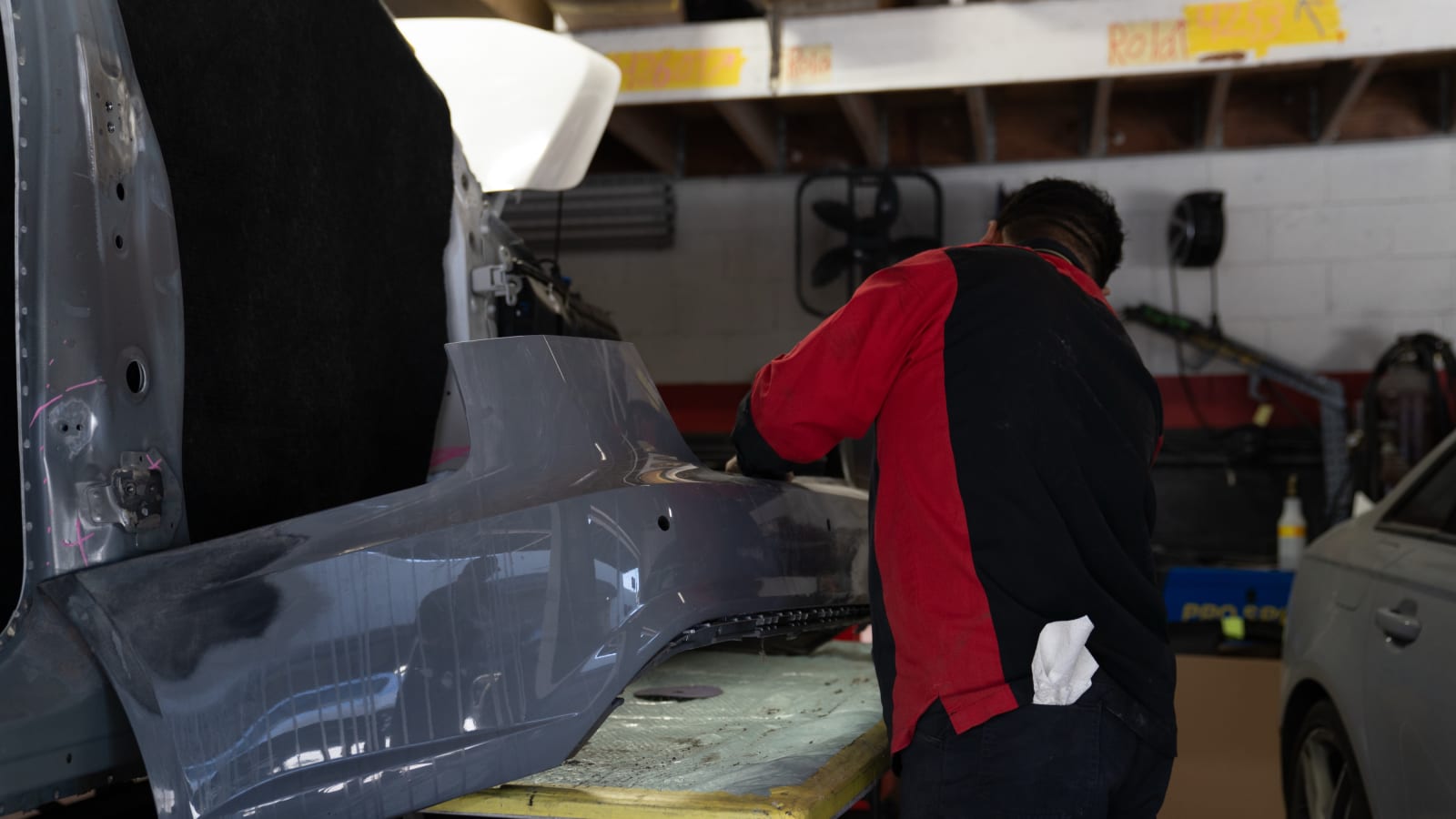
Rear bumper repair or replacement. Rear radar sensors for blind spot monitoring and cross-traffic alert are mounted behind or within the rear bumper cover. Removing that cover for repair — even for cosmetic damage — means those sensors need to be checked and recalibrated.
Side mirror replacement. Some blind spot indicators and camera modules are integrated into the mirror housing.
Suspension or wheel alignment work. Changes to ride height or wheel alignment can alter the angle at which sensors “see” the road. Several OEMs require recalibration after any alignment service performed during collision repair.
Structural repair. If the vehicle’s structure has been pulled back to specification on a frame rack, sensor mounting points may have shifted even if they look correct. Calibration confirms they’re actually aimed where they need to be.
The key point: many of these triggers aren’t dramatic. A bumper respray. A windshield chip repair that turns into a replacement. A fender pull that slightly moves a mounting point. The damage your shop is fixing may look minor, but the calibration requirement is the same.
How ADAS Calibration Works: Static Vs. Dynamic
There are two methods for calibrating ADAS sensors, and most vehicles require one or both depending on the manufacturer’s repair procedures.
Static Calibration
Static calibration happens indoors in a controlled environment. The vehicle is positioned on a level surface, and a specialized target board or panel is placed at a precise distance and angle in front of the car. The shop then uses OEM-specific diagnostic software to run a calibration routine that tells each sensor to “look at” the target and confirm its alignment.
This is where equipment and training matter. The floor has to be level. The target has to be the exact distance and height specified by the manufacturer — measurements that vary by make and model. The vehicle needs to be at the correct ride height with properly inflated tires. Ambient lighting conditions matter. Even the fuel level in the tank can affect the process for some vehicles because it changes the car’s weight distribution.
A shop without the right targets, the right floor space, or the right diagnostic tools simply cannot perform a proper static calibration. There’s no workaround.
Dynamic Calibration
Dynamic calibration requires driving the vehicle at a specific speed, on a specific type of road, under specific conditions. The system uses real-world input — actual lane markings, actual road surfaces, actual surrounding objects — to teach the sensors where “correct” is.
Some vehicles need a dynamic calibration after the static process is complete. Others require only dynamic calibration. The manufacturer’s repair procedures dictate which method applies.
Why Both May Be Required
For many late-model vehicles, especially those with multiple overlapping ADAS features, the manufacturer calls for static calibration first, followed by a dynamic verification drive. The static process gets the sensors close to specification. The dynamic drive confirms they’re reading correctly in real-world conditions.
Shops that skip the dynamic step — or that don’t have a safe route established for dynamic calibration drives — may return a vehicle that passes the static check but still has misaligned sensors under actual driving conditions.
What Happens When a Shop Skips ADAS Calibration
This is where it gets serious.
A sensor that’s off by just one degree can misread a vehicle’s position by several feet at highway speeds. That means your automatic emergency braking might activate too late — or too early. Your lane keeping assist might push you toward the lane edge instead of away from it. Your blind spot monitoring might have a dead zone where it can’t detect the car next to you.
And here’s what most vehicle owners don’t realize: ADAS sensors don’t always throw a warning light when they’re out of calibration. Some systems have self-diagnostic capability that will flag an error. Many don’t. A sensor can be misaligned enough to compromise its function while still appearing to work normally on the dashboard. No warning light. No error code. Just a system that’s quietly making wrong decisions at 65 miles per hour.
The risks of skipping calibration fall into three categories:
Safety risk. Features designed to prevent collisions may fail to activate, activate late, or activate in the wrong situation. False alerts can condition you to ignore warnings entirely, which is arguably worse than having no system at all.
Insurance and liability risk. If you’re involved in a subsequent accident and an investigation reveals that ADAS systems weren’t calibrated during a prior repair, it creates a liability question. Insurance companies are increasingly documenting calibration compliance as part of collision repair.
Warranty risk. Vehicle manufacturers can point to improper post-collision calibration as grounds for denying warranty claims on ADAS-related components. If the repair record doesn’t show calibration was performed per OEM procedures, the warranty protection on those systems is questionable.
Who Pays for ADAS Calibration?
ADAS calibration is part of the collision repair. If the damage that triggered the repair is covered by insurance, the calibration should be covered too — because it’s a required step to restore the vehicle to pre-loss condition.
In practice, it doesn’t always go smoothly. Some insurance adjusters push back on calibration charges, especially if the original estimate was written by a shop that didn’t include it. This is one of the reasons it matters who writes your initial repair estimate: a shop that understands ADAS requirements will document the calibration need from the start, making it much harder for an adjuster to remove it later.
If you’re paying out of pocket, expect ADAS calibration to add anywhere from $150 to $600 per system depending on the vehicle, the number of sensors involved, and whether static, dynamic, or both calibrations are required. Luxury and performance vehicles with more complex sensor arrays typically fall on the higher end.
How to Know If your Repair Shop Actually Calibrates ADAS
This is the practical question. Not every body shop has ADAS calibration capability, and not every shop that claims to do it actually follows OEM procedures.
Here’s what to ask — and what the answers should sound like:
“Do you perform ADAS calibration in-house?” A good answer is yes, with specific reference to the equipment and space they use. Shops that subcontract calibration aren’t necessarily bad, but it adds a layer of complexity and potential delay to the repair.
“Do you follow the manufacturer’s calibration procedures for my specific vehicle?” The right answer references OEM repair procedures by name — not a generic “we calibrate all vehicles the same way.” Calibration requirements vary significantly by make, model, and year. A one-size-fits-all approach is a red flag.
“Will calibration be documented on the repair order?” Calibration should appear as a line item on the final repair documentation, with notes on which systems were calibrated and what method was used. If it’s not documented, you have no proof it was done.
“Is the calibration included in the estimate, or will it be supplemented?” Shops that include calibration in the original estimate are thinking ahead. If it’s not on the initial estimate, ask why — and make sure it gets added before repairs begin.
At Pristine Collision Center, ADAS calibration is integrated into every repair that involves sensor-adjacent components. Our I-CAR Gold Class facility and Platinum-certified technicians follow manufacturer-specific calibration procedures using the diagnostic tools and controlled environments those procedures require. We don’t treat calibration as an afterthought or an add-on — it’s part of completing the repair correctly.
The Expanding Role of ADAS in Modern Vehicles
The calibration conversation is only getting more relevant. In 2026, ADAS features aren’t optional extras on high-end vehicles — they’re standard equipment on most new cars.
The federal government now requires automatic emergency braking on all new passenger vehicles starting with the 2029 model year, expanding on earlier requirements for rear visibility cameras. Manufacturers have already been ahead of the mandate — most 2024+ vehicles come with AEB, lane departure warning, and blind spot monitoring as standard.
What this means for collision repair: the percentage of damaged vehicles that require ADAS calibration after repair is climbing every year. Industry projections estimate that the ADAS calibration market will generate over $4 billion annually by 2030, driven purely by the growing number of sensor-equipped vehicles entering the repair cycle.
For vehicle owners, this means ADAS calibration isn’t a specialty service anymore. It’s a baseline competency that your collision repair shop needs to have — and needs to take seriously.
FAQ
Do I Need ADAS Calibration After a Minor Fender Bender?
Potentially, yes. Even low-speed impacts can shift sensor positions by enough to affect function. If the repair involves any bumper, windshield, mirror, or structural work near sensor mounting points, the manufacturer likely requires recalibration. The only way to know for certain is to check the OEM repair procedures for your specific vehicle.
Will My Dashboard Show a Warning Light If ADAS Sensors Are Out of Calibration?
Not always. Some systems have self-diagnostic capability, but many ADAS sensors can be misaligned without triggering a warning light or error code. This is one of the main reasons calibration needs to be performed proactively during repair — you can’t rely on the dash to tell you something is wrong.
How Long Does ADAS Calibration Take?
A static calibration typically takes 30 to 90 minutes per system. If dynamic calibration is also required, add time for the road test under specific conditions. For a vehicle with multiple systems needing recalibration after a collision, expect the process to add a few hours to the overall repair timeline.
Does Insurance Cover ADAS Calibration After an Accident?
Yes — if the calibration is a required step to restore the vehicle to pre-loss condition, it should be covered as part of the collision claim. The key is making sure it’s documented on the repair estimate from the beginning. Shops that understand ADAS requirements build it into the initial estimate so there’s no dispute with the adjuster later.
What’s the Difference Between Static and Dynamic ADAS Calibration?
Static calibration is performed indoors using specialized targets at precise distances. Dynamic calibration requires driving the vehicle under specific conditions so sensors can read real-world input. Many vehicles require both — static first to set baseline alignment, then a dynamic drive to verify performance. The manufacturer’s repair procedures dictate which method is needed for each system on each vehicle.
Can Any Body Shop Perform ADAS Calibration?
Not reliably. Proper ADAS calibration requires specific OEM diagnostic tools, calibration targets, a controlled level environment, and technicians trained on the procedures for each vehicle make and model. Shops without dedicated calibration equipment may skip the step entirely or use generic processes that don’t meet manufacturer specifications. I-CAR Gold Class certification and OEM training are indicators that a shop takes calibration seriously.
Is ADAS Calibration the Same As a Pre-Scan or Post-Scan?
No. Pre-scans and post-scans are diagnostic reads that check for fault codes before and after repair. They tell you IF something is wrong. Calibration is the actual process of realigning sensors to specification. A post-scan might confirm that calibration was successful, but it doesn’t replace the calibration itself. Both should be performed during a proper collision repair.
Your Vehicle’s Safety Systems Deserve the Right Repair
If you’ve been in an accident, make sure your shop isn’t skipping ADAS calibration. Pristine Collision Center’s I-CAR Gold Class facilities and Platinum-certified technicians perform manufacturer-specific calibration on every repair that requires it — documented, verified, and done right.
Get a Free Estimate →
Schedule Your Repair →